October 26, 2026
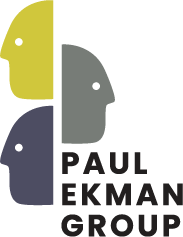

For many people, reading emotion in others happens fairly automatically. A slight tightening around the eyes, a fleeting expression of sadness, a quick flash of fear or surprise, these subtle emotional signals often guide social interaction without much conscious effort. For those who have challenges in reading facial clues, understanding facial expressions can feel much less intuitive.
Many neurodivergent individuals, including on the autism spectrum, describe social interaction as navigating an unfamiliar language without a dictionary. People living with social anxiety may also experience difficulty interpreting emotional cues, especially when anxiety itself overwhelms attention and perception during interactions. In both cases, uncertainty about what others are feeling can lead to confusion, exhaustion, self-doubt, or withdrawal.
Over the years, we have heard from many individuals who found that Dr. Paul Ekman’s research on facial expressions and emotional awareness offered not only practical tools, but also a sense of understanding and validation. Following Dr. Ekman’s passing, several messages shared on the memorial page reflected this impact in deeply personal ways.
One contributor wrote:
“I honestly think Paul Ekman’s research on emotions should be shared with every autistic person. I found his work years ago, at a moment when I was trying to understand why recognizing other people’s emotions felt so hard for me. Discovering his research was like someone finally turning on the lights.”
Later in the message, they described how learning about facial expressions and emotions helped them better understand both themselves and the people around them after receiving a late autism diagnosis:
“It didn’t magically fix everything, but it changed how I move through the world. I’m more in tune with my own emotions, and I understand others in a way I didn’t think was possible for me before.”
Another individual shared:
“Without [Dr. Ekman], I would still be a lost boy in a world of emotions which are alien to me. Having studied his work, however, I am even more adept at spotting, and recognizing emotions than most of the neurotypical folks in my life!”
These powerful reflections speak to a core truth: emotional awareness is not a fixed trait that we have or don’t have. Like many vital communication skills, emotional intelligence can be strengthened through targeted learning, structured observation, and intentional practice
Scientific research on autism and emotional recognition has increasingly emphasized that social communication differences are complex and highly individual. Some autistic people may experience difficulty identifying or reading facial expressions, while others become exceptionally observant of patterns in behavior and expression over time. Likewise, social anxiety can interfere with accurately perceiving emotional cues, particularly when fear of judgment narrows attention inward.
A 2022 meta-analysis examining 148 studies found that, on average, autistic individuals experienced greater difficulty recognizing basic facial expressions of emotion compared with non-autistic individuals. However, these findings reflect group averages, and individual abilities vary considerably.
Encouragingly, research also suggests that facial emotion recognition skills can be improved through training. A 2025 meta-analysis found significant improvements in facial emotion recognition among autistic children who participated in targeted training programs, although further research is needed to understand how these improvements translate into everyday social interactions.
Importantly, struggling to interpret emotional signals does not mean someone lacks empathy, care, or emotional depth. In fact, many people who experience social communication challenges care deeply about connection and understanding. What may be missing is not compassion, but confidence, clarity, or shared communication frameworks.
Dr. Paul Ekman’s life’s work focused on making emotional signals more visible and understandable. His groundbreaking research into universal facial expressions, micro expressions, and other nonverbal communication gave people a vocabulary and framework for observing emotions that might otherwise feel confusing or inaccessible. For some individuals who have historically felt socially “out of sync,” this scientific framework can be transformative.
In addition to the personal experiences shared with us over the years, Dr. Ekman’s training tools have also been recognized as potential educational resources for autistic individuals. In a 2013 article published in Autism Spectrum News, psychologist Dr. Lynda Geller explored approaches to supporting students on the autism spectrum and highlighted Ekman’s Micro Expression Training Tool (METT) and Subtle Expression Training Tool (SETT) as resources for learning to recognize emotional signals in facial expressions.
We welcome opportunities to learn more about how Dr. Ekman’s training tools are being used in research and educational settings. We encourage researchers, academics, educators, and clinicians who have conducted studies using these tools, are aware of relevant research, or are interested in exploring future research opportunities to reach out to us at custserv@paulekman.com.
While emotional skills training is not a substitute for therapy, support, or individualized care, many people have found that learning about emotions can reduce uncertainty and increase confidence in social interactions. It can also foster greater self-awareness: recognizing not only what others may be feeling, but what we ourselves are experiencing moment to moment.
Today, those lessons continue through the educational resources developed by Dr. Paul Ekman and expanded by Dr. Eve Ekman and the Paul Ekman Group. Tools like the online Micro Expressions Training Tools and The Feelings Field Guide were created to help people build emotional awareness in practical, approachable ways.
October 26, 2026
August 21, 2026