November 23, 2026


Have you ever said something in anger that you later regretted? Or found yourself withdrawing from a difficult conversation before you even realized what you were doing?
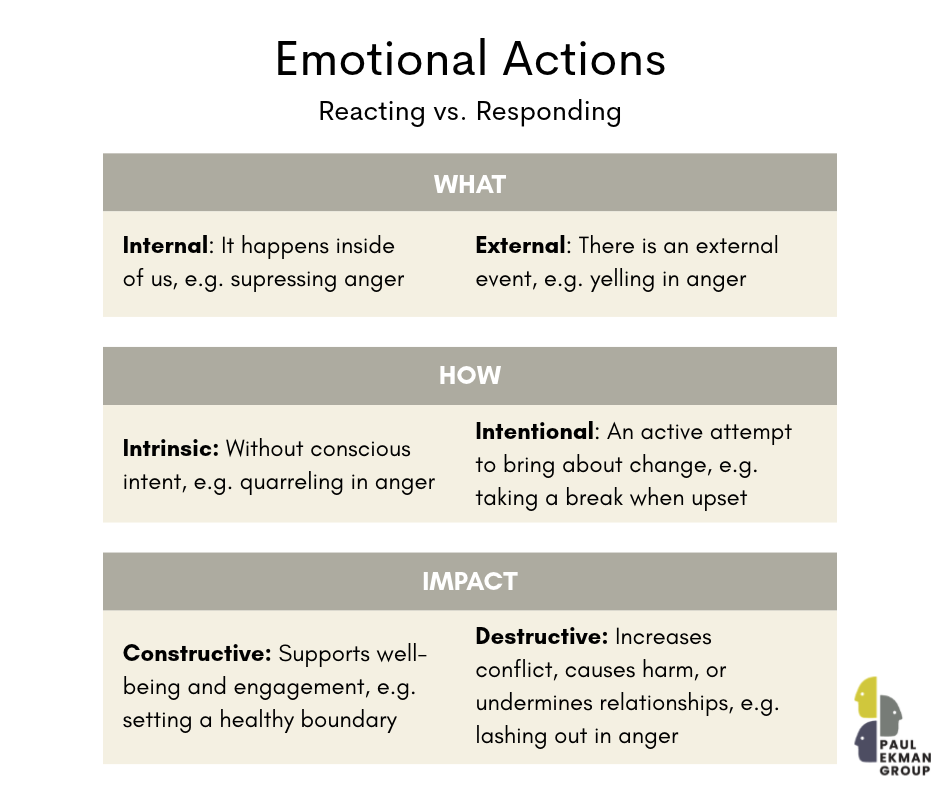
Our emotions don’t just influence how we feel. They also prepare us to act. Sometimes these actions happen automatically, while other times we have an opportunity to consciously choose how we respond. That’s the difference between reacting and responding.
Understanding the difference between intrinsic and intentional actions, as well as constructive and destructive responses, can help us recognize our emotional habits and make more informed choices.
The short version:
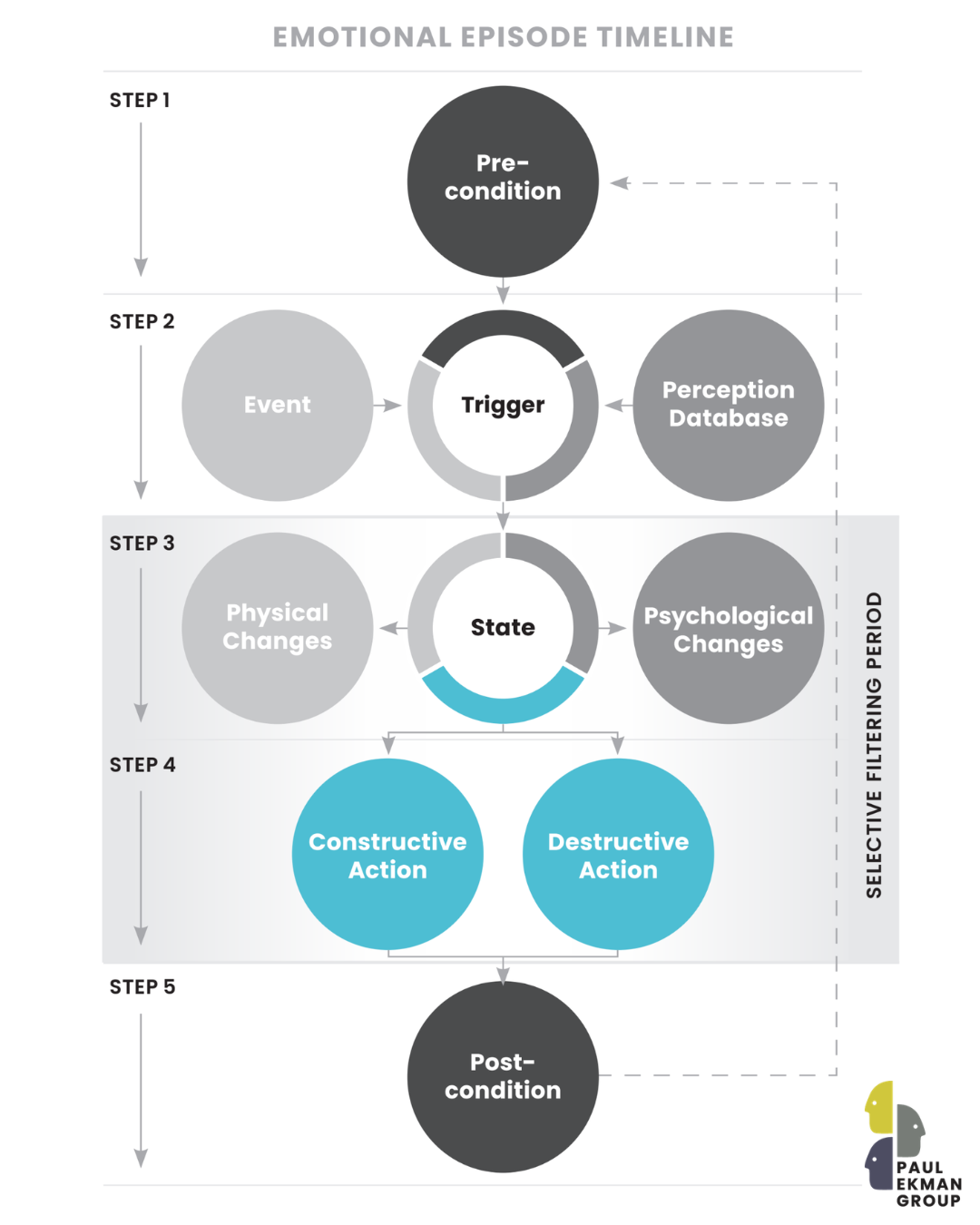
In our previous blog, The Emotional Episode Timeline, we explored the stages of an emotional episode, from the initial trigger through our emotional experience, actions, and their consequences.
Here, we’re taking a closer look at Step 4: Action.
Emotional actions can be external, such as yelling in anger or reaching out for comfort when upset, or internal, such as suppressing anger or worrying about the future.
As illustrated in the Atlas of Emotions, these actions can be intrinsic (without conscious intent), intentional (an active attempt to bring about change), or both.
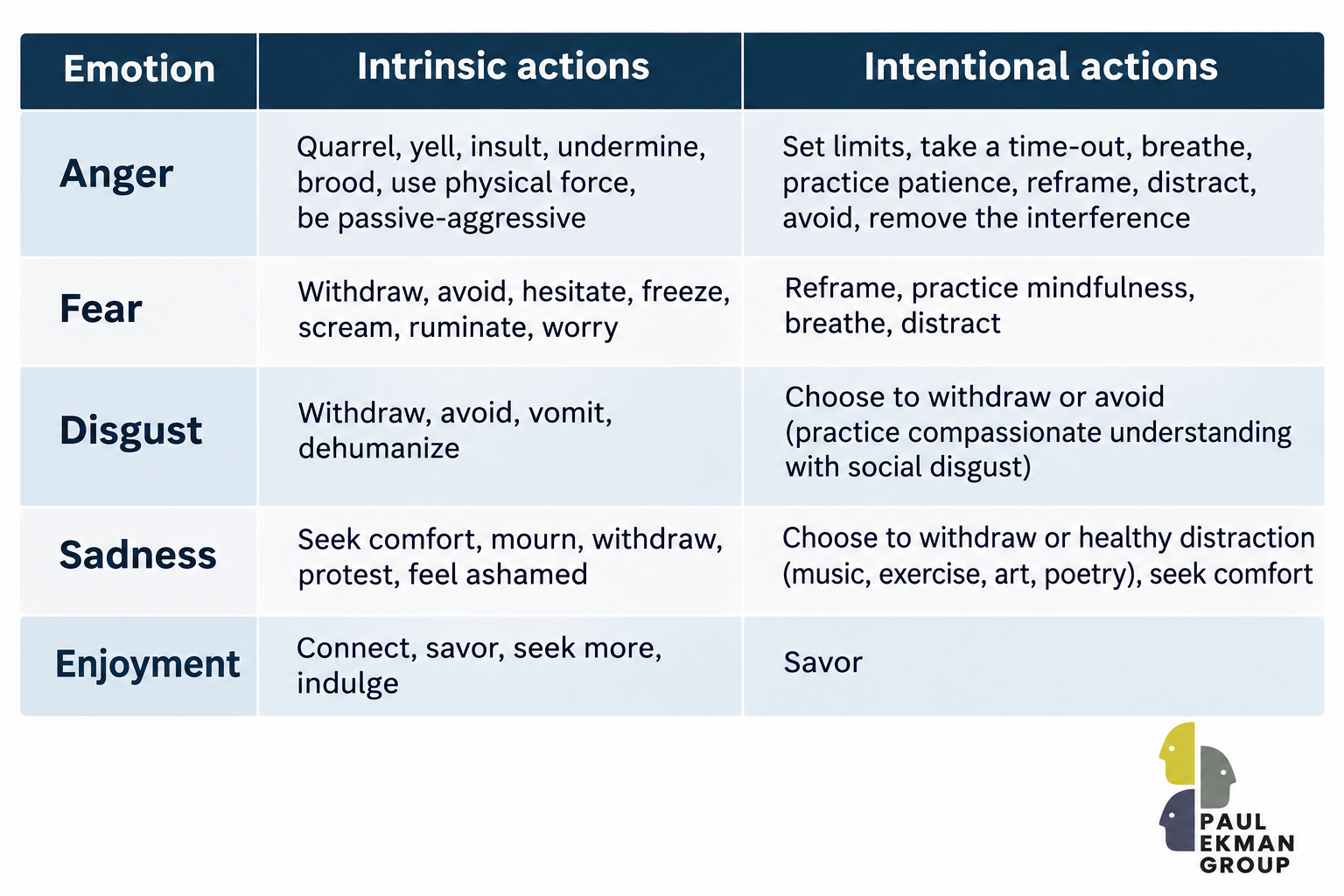
Each emotion is associated with a range of possible actions. Some arise automatically, while others involve conscious choice.
The following examples are drawn from the Atlas of Emotions.
Importantly, the same behavior can be intrinsic or intentional depending on how it arises. From the outside, the action may look identical. What differs is whether it was automatic or chosen.
For example, withdrawing from a difficult conversation might be an automatic reaction to fear or sadness. Alternatively, when we’re angry we might intentionally step away to regain composure before continuing the discussion.
While intrinsic and intentional describe how an action arises, another important distinction is whether that action is constructive or destructive.
In Cultivating Emotional Balance (CEB), emotional actions are explored in terms of their impact on our own well-being, our relationships, and our ability to collaborate with others.
Constructive actions support well-being, understanding, and effective engagement with a situation. Destructive actions may increase conflict, cause harm, or undermine relationships.
For example, anger can motivate us to set a healthy boundary or to lash out at someone. Fear can prompt us to move away from danger or lead us to avoid addressing an important problem.
These two lenses work independently of each other. An action that arises automatically, such as reaching out for comfort when we’re upset, can be constructive, while a deliberate choice can still be destructive, such as intentionally avoiding a conversation that needs to happen.
We cannot always choose when an emotion arises, but we can develop greater awareness of how it influences our behavior.
By recognizing our automatic reactions and considering whether our actions are constructive or destructive, we can create more opportunities to respond thoughtfully.
The goal isn’t to eliminate emotional reactions or always respond perfectly. Rather, it’s to develop the awareness needed to make choices that better support our own and others’ well-being.
The Emotional Episode Timeline and the distinction between intrinsic and intentional actions are featured in the Atlas of Emotions, an interactive resource developed by Drs. Paul and Eve Ekman.
For those interested in developing greater emotional awareness, Cultivating Emotional Balance (CEB) is a training program that combines emotion science with contemplative practices to help participants better understand their emotional experiences, recognize habitual reactions, and cultivate more constructive responses.
You can also explore the timeline and other foundational emotion science concepts in the guidebook accompanying The Feelings Field Guide, which includes reflection exercises to support emotional awareness.
Dr. Eve Ekman is also developing an Atlas of Emotions book, expanding on concepts from the interactive Atlas.
Interested in the upcoming book? Sign up below to be notified when it becomes available.
A reaction is an intrinsic action: it arises automatically, without conscious intent. A response is an intentional action: an active attempt to bring about change. The same behavior, like withdrawing from a hard conversation, can be either one, depending on how it arises.
Some of the actions associated with anger, such as quarreling, yelling, or insulting, are intrinsic. They arise automatically, before we’ve had a chance to consciously choose how to respond.
Withdrawing can be an automatic reaction to fear or sadness. Becoming aware of that habit creates more opportunities to choose how we respond.
The Atlas of Emotions lists a number of intentional actions for anger, including setting limits, taking a time-out, breathing, practicing patience, and reframing.
We can’t always choose when an emotion arises, and the goal isn’t to eliminate emotional reactions. But building awareness of how emotions influence our behavior creates more opportunities to respond thoughtfully.
November 23, 2026
October 26, 2026
August 21, 2026